نوع مقاله : مقاله پژوهشی
نویسندگان
1
دانشجوی دکتری، دانشکده معماری، شهرسازی و هنر، مرکز تحقیقات گردشگری معماری و شهرسازی، واحد اصفهان (خوراسگان)، دانشگاه آزاد اسلامی، اصفهان، ایران.
2
دانشیار، دانشکده معماری، شهرسازی و هنر، مرکز تحقیقات گردشگری معماری و شهرسازی، واحد اصفهان (خوراسگان)، دانشگاه آزاد اسلامی، اصفهان، ایران.
3
استادیار، دانشکده معماری، شهرسازی و هنر، مرکز تحقیقات گردشگری معماری و شهرسازی، واحد اصفهان (خوراسگان)، دانشگاه آزاد اسلامی، اصفهان، ایران.
4
استادیار، دانشکده معماری، شهرسازی و هنر، واحد ابهر، دانشگاه آزاد اسلامی، ابهر، ایران.
چکیده
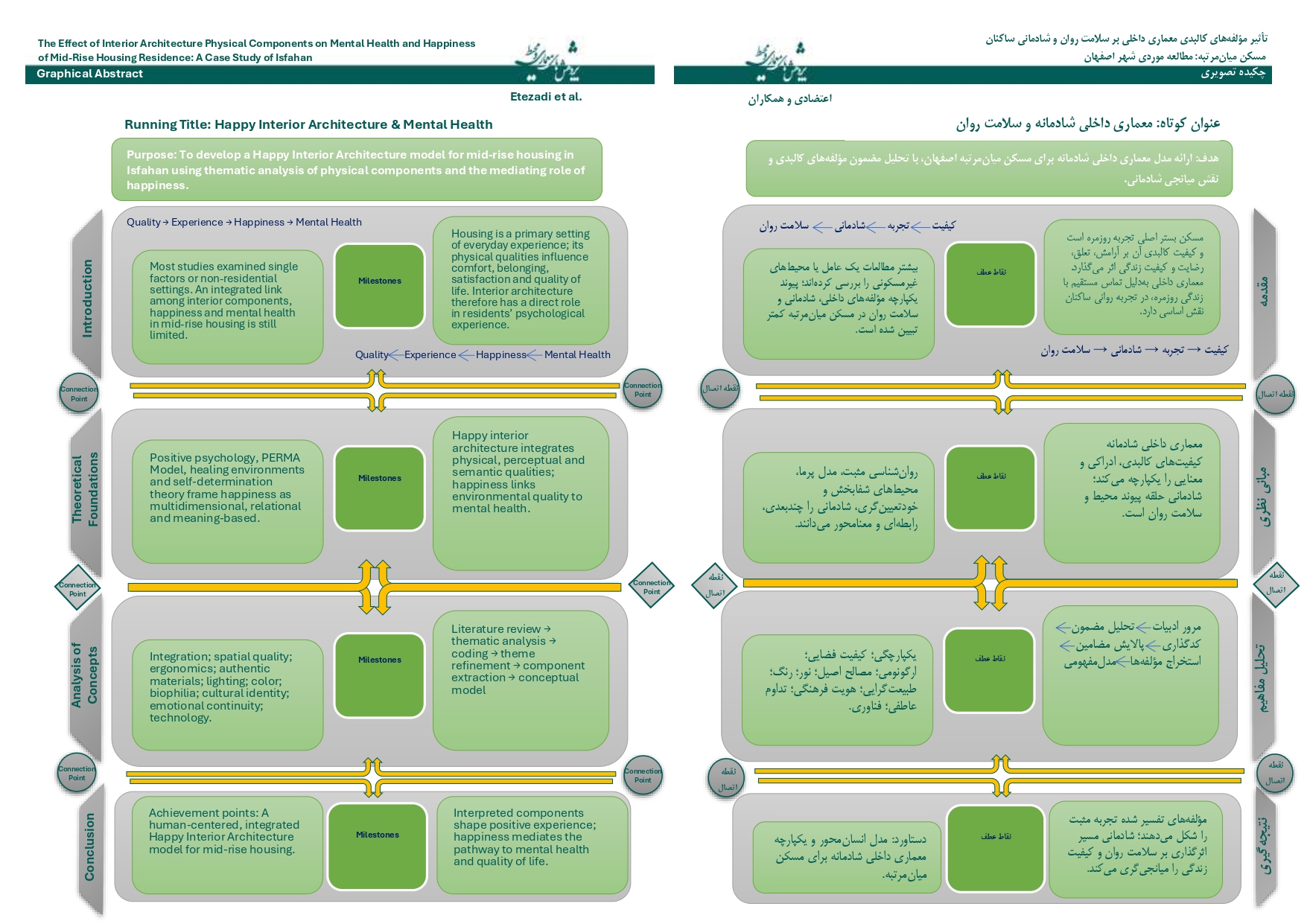
مسکن بهعنوان یکی از مهمترین بسترهای تجربه زیسته انسان، نقشی فراتر از تأمین نیازهای عملکردی داشته و در شکلدهی به احساس آرامش، تعلق، رضایت و کیفیت زندگی ساکنان مؤثر است. در رویکردهای نوین معماری، توجه به ویژگیهای کالبدی فضا و تأثیر آنها بر وضعیت روانی انسان، زمینه شکلگیری دیدگاههای انسانمحور و سلامتمحور را فراهم کرده است. هدف این پژوهش، ارائه مدل طراحی معماری داخلی شادمانه در فضاهای مسکونی میانمرتبه شهر اصفهان بر اساس تحلیل اثر مؤلفههای کالبدی بر سلامت روان ساکنان و بررسی نقش میانجی شادمانی است. این پژوهش از نظر هدف، کاربردی و از نظر روش، کیفی است که در آن با بهرهگیری از روش تحلیل مضمون و بررسی دیدگاه خبرگان، مؤلفههای مؤثر بر کیفیت معماری داخلی شناسایی و در قالب یک چارچوب مفهومی سازماندهی شد. یافتههای پژوهش نشان داد که کیفیت معماری داخلی شادمانه حاصل تعامل میان ابعاد کالبدی، ادراکی و معنایی فضا است. نتایج تحلیلها، مؤلفههایی شامل یکپارچگی طراحی، کیفیت و سازماندهی فضایی، چیدمان تعاملی و پاسخگو، مصالح اصیل و طبیعی، کیفیت نور و ادراک محیطی، طبیعتگرایی فضایی، تعادل رنگی، هویت فرهنگی، تداوم عاطفی با محیط و تلفیق فناوری با زندگی روزمره را بهعنوان عوامل مؤثر بر سلامت روان ساکنان شناسایی کرد. همچنین یافتهها نشان داد که شادمانی بهعنوان متغیری میانجی، رابطه میان کیفیت مؤلفههای کالبدی و سلامت روان را تقویت میکند. بر اساس نتایج، مدل پیشنهادی پژوهش، معماری داخلی شادمانه را بهعنوان نظامی انسانمحور معرفی میکند که از طریق ارتقای کیفیت ادراک محیط، افزایش حس تعلق، تقویت تعاملات اجتماعی و ایجاد تجربههای مثبت، زمینه بهبود سلامت روان ساکنان را فراهم میسازد. این مدل میتواند بهعنوان چارچوبی نظری و کاربردی برای طراحی فضاهای مسکونی میانمرتبه با رویکرد ارتقای کیفیت زندگی مورد استفاده قرار گیرد.
چکیده تصویری
کلیدواژهها
عنوان مقاله English
The Effect of Interior Architecture Physical Components on Mental Health and Happiness of Mid-Rise Housing Residence: A Case Study of Isfahan
نویسندگان English
Zahra Alsadat Etezadi
1
Seyedeh Marzieh Tabaeian
2
Sanaz Rahravi Poodeh
3
Aghil Emamgholi
4
1
Ph.D. Student of Architecture, Department of Architecture, Tourism, Architecture and Urban Research Center, ISF.C., Islamic Azad University, Isfahan, Iran.
2
Associate Professor, Department of Architecture, Tourism, Architecture and Urban Research Center, ISF.C., Islamic Azad University, Isfahan, Iran.
3
Assistant Professor, Department of Architecture, Tourism, Architecture and Urban Research Center, ISF.C., Islamic Azad University, Isfahan, Iran.
4
Assistant Professor, Department of Architecture, Abhar, Islamic Azad University, Abhar, Iran.
چکیده English
Housing, as one of the most significant settings of human lived experience, extends beyond the provision of functional needs and plays a crucial role in shaping residents’ sense of comfort, belonging, satisfaction, and overall quality of life. In contemporary architectural approaches, increasing attention to the physical characteristics of space and their influence on human psychological conditions has contributed to the emergence of human-centered and health-oriented perspectives in architectural design. This study aims to develop a Happy Interior Architecture Design Model for mid-rise residential environments in Isfahan, based on analyzing the effects of physical architectural components on residents’ mental health and examining the mediating role of happiness. The research is applied in terms of purpose and qualitative in terms of methodology. Through thematic analysis and an examination of experts’ perspectives, the study identifies the key components influencing interior architectural quality and organizes them within a conceptual framework. The findings demonstrate that the quality of happy interior architecture emerges from the interaction among the physical, perceptual, and semantic dimensions of space. The analysis identified several key components as influential factors in residents’ mental health, including design integration; spatial quality and organization; interactive and responsive spatial layout; authentic and natural materials; lighting quality and environmental perception; spatial biophilia; color balance; cultural identity; emotional continuity with the environment; and the integration of technology into everyday life. Furthermore, the findings indicate that happiness, as a mediating variable, strengthens the relationship between the quality of physical architectural components and residents’ mental health. Based on these findings, the proposed model conceptualizes happy interior architecture as a human-centered design system that contributes to improving residents’ mental health by enhancing environmental perception, fostering a sense of belonging, strengthening social interactions, and generating positive spatial experiences. The proposed model can serve as both a theoretical and practical framework for the design of mid-rise residential environments with an emphasis on enhancing residents’ quality of life.
کلیدواژهها English
Happy Interior Architecture
Mental Health
Happiness
Physical Architectural Components
Indoor Environmental Quality
Mid-Rise Housing