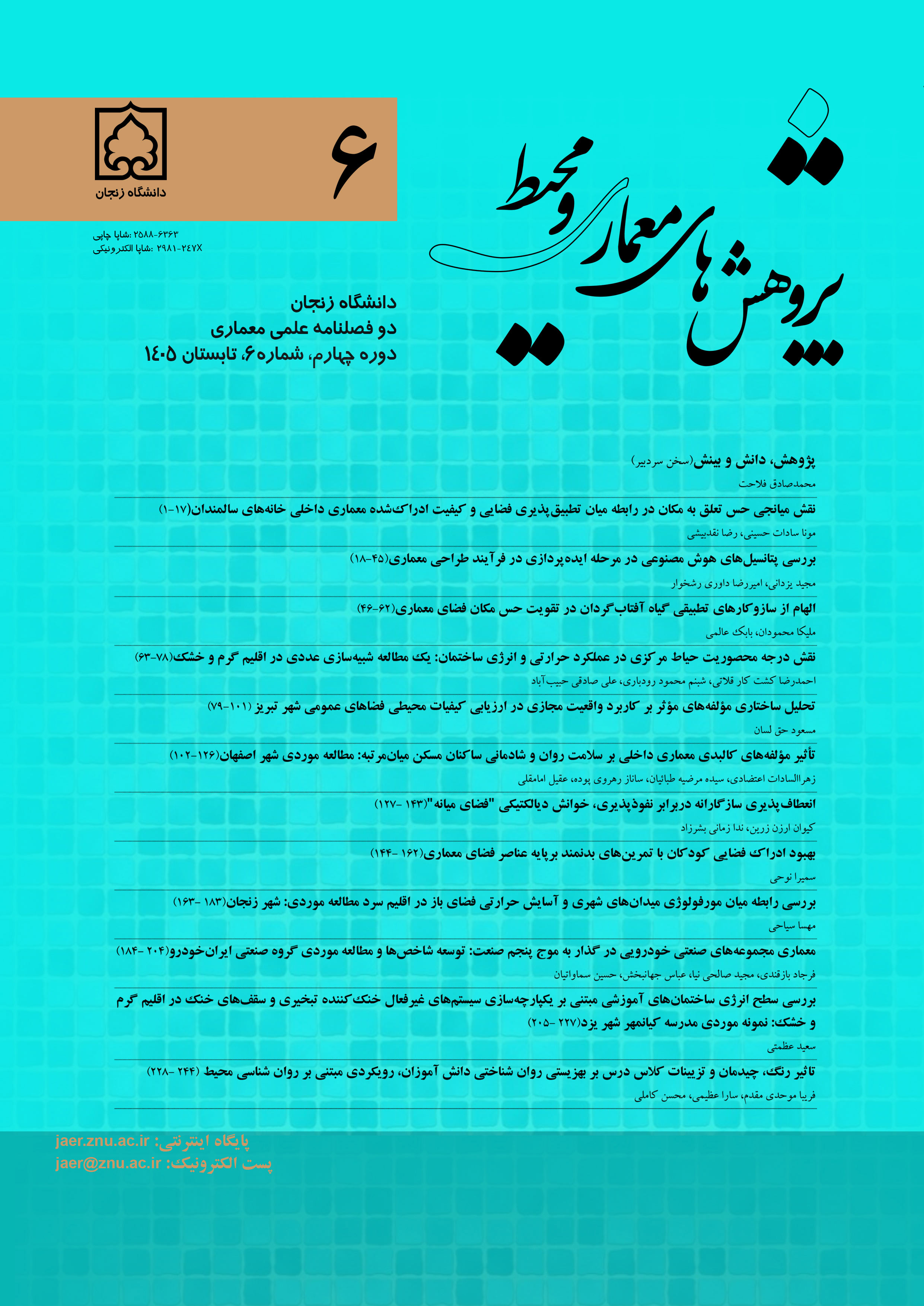
پژوهش‌های معماری و محیط

پژوهش‌های معماری و محیط

بهبود ادراک فضایی کودکان با تمرین‌های بدنمند برپایه عناصر فضای معماری

نوع مقاله : مقاله پژوهشی

نویسنده
دانش‌آموخته کارشناسی ارشد، گروه معماری، دانشکده فنی و مهندسی، دانشگاه زنجان، زنجان، ایران.
چکیده
ادراک فضایی یکی از مؤلفه‌های اساسی رشد شناختی کودکان است که نقش مهمی در تعامل با محیط، جهت‌یابی و یادگیری ایفا می‌کند. با وجود اهمیت این توانایی، بخش قابل‌توجهی از رویکردهای آموزشی و پژوهشی موجود، ادراک فضایی را عمدتاً در قالب فرآیندهای ذهنی یا مهارت‌های دیداری بررسی کرده‌اند و کمتر به نقش بدن، حرکت و تجربه مستقیم محیط توجه داشته‌اند. پژوهش حاضر با هدف تبیین ظرفیت عناصر بنیادین طراحی معماری در توسعه ادراک فضایی کودکان، این موضوع را از منظر علوم شناختی و پدیدارشناسی ادراک بررسی می‌کند. این پژوهش از نوع نظری–مفهومی بوده و با رویکردی تحلیلی–تفسیری انجام شده است. مفاهیم بدنمندی، ادراک چندحسی و حسی–حرکتی در دو حوزه علوم شناختی و پدیدارشناسی تحلیل شدند تا نشان داده شود هر دو رویکرد، على‌رغم تفاوت‌های معرفت‌شناختی، بر نقش بنیادین «حرکت» به‌عنوان تأثیرگذارترین مؤلفه‌ی حسی–ادراکی در شکل‌گیری تجربه فضایی هم‌سو هستند. در ادامه، با تکیه بر مفهوم "حرکت دربرگیرنده" که در ارتباطی تنگاتنگ با اساس مفهوم "بدنمندی" است، نحوه‌ی بیان و ادراک حرکت در فرم‌های ایستای معماری تبیین شد و بر این اساس، عناصر بنیادین طراحی معماری—نقطه، خط، سطح و حجم—از منظر الگوهای حرکتی‌ای که در بدن ادراک‌کننده برمی‌انگیزند بازخوانی شدند. نتایج نشان می‌دهد که هر یک از این عناصر، الگوی حرکتی بدنمند متفاوتی (توقف و تمرکز، امتداد و جهت‌یابی، تماس و مواجهه، احاطه‌شدگی) را فعال می‌کند که به شکل‌گیری مفاهیم فضایی بنیادین می‌انجامد. بر این اساس، مدلی مفهومی ارائه شده است که ارتباط میان عناصر بنیادین معماری، الگوی حرکتی برانگیخته‌شده و مفهوم فضایی ادراک‌شده را تبیین می‌کند و می‌تواند مبنایی نظری برای طراحی و ارزیابی تمرین‌های بدنمند در پژوهش‌های آتی فراهم آورد.

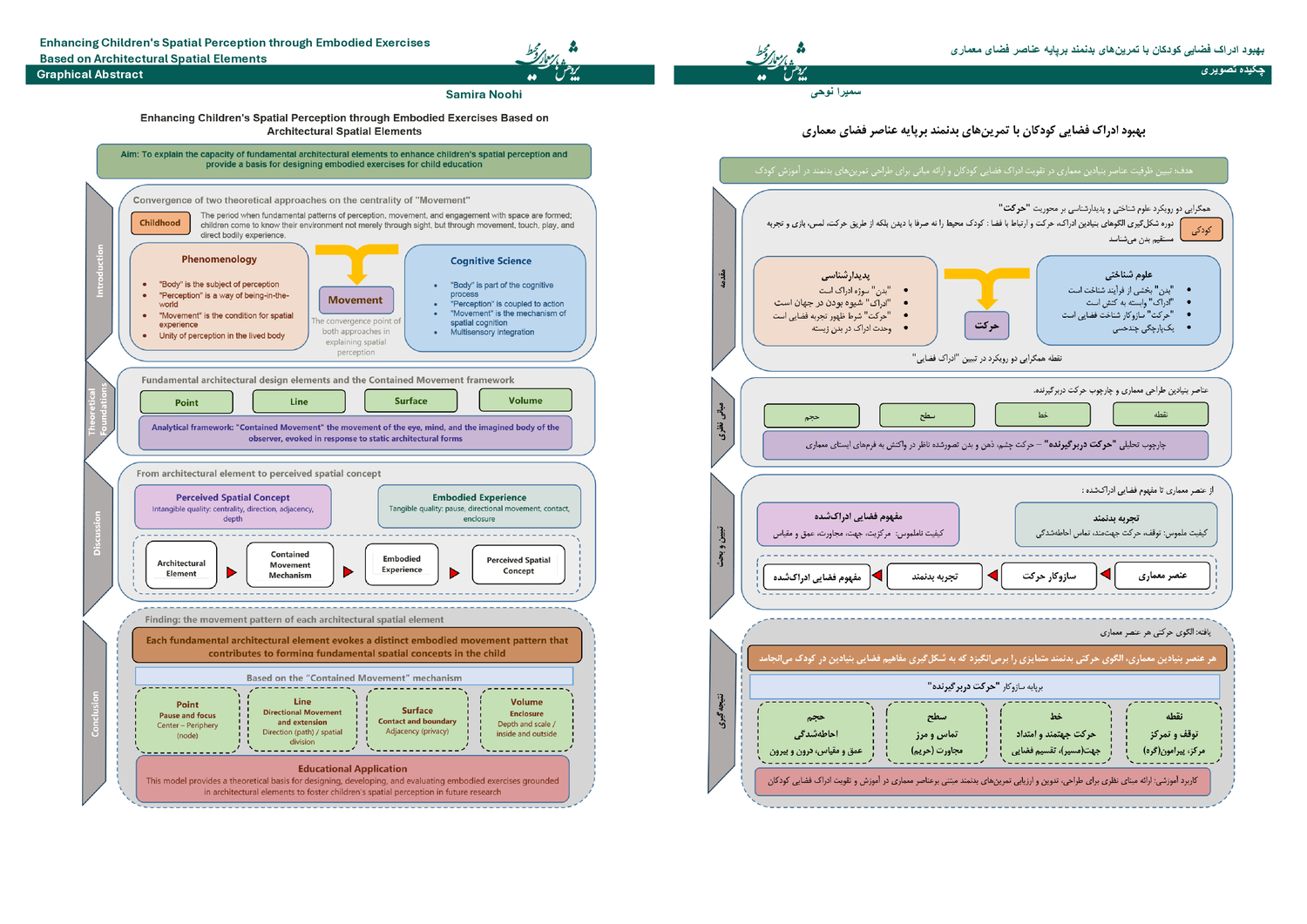
چکیده تصویری

بهبود ادراک فضایی کودکان با تمرین‌های بدنمند برپایه عناصر فضای معماری
کلیدواژه‌ها

عنوان مقاله English

Enhancing Children's Spatial Perception through Embodied Exercises Based on Architectural Spatial Elements

نویسنده English

Samira Noohi
M.A. Graduate, Department of Architecture, Faculty of Technology and Engineering, University of Zanjan, Zanjan, Iran.
چکیده English

Spatial perception is a fundamental component of children''s cognitive development, playing a significant role in environmental interaction, navigation, and learning. Despite its importance, many educational and research approaches have addressed spatial perception mainly as a cognitive or visual ability, giving limited attention to the role of the body, movement, and lived engagement with space. This study examines the potential of fundamental architectural design elements in fostering children''s spatial perception from both cognitive-science and phenomenological perspectives, adopting a theoretical-conceptual framework and an analytical-interpretive approach. Embodiment, multisensory perception, and sensorimotor experience are analyzed within both traditions to show that, despite differing epistemological foundations, they converge on the centrality of movement as the most influential perceptual-motor factor in the formation of spatial experience. Building on Hardy''s (2011) concept of ''contained movement,'' which is closely related to embodiment, the study explains how movement is expressed and perceived even in static architectural forms, and reinterprets point, line, plane, and volume in terms of the bodily movement patterns they evoke rather than any single ''dominant sense''. The findings indicate that each element activates a distinct embodied movement pattern—pause and focus, extension and direction, contact and confrontation, enclosure—that contributes to the formation of fundamental spatial concepts. A conceptual model is proposed linking architectural elements, evoked movement patterns, and perceived spatial concepts, offering a theoretical foundation for the future design and evaluation of embodied exercises.

کلیدواژه‌ها English

Spatial Perception
Fundamental Architectural Design Elements
Embodiment
movement
child education
دوره 4، شماره 6 - شماره پیاپی 6
بهار و تابستان 1405
شهریور 1405

  • تاریخ دریافت 29 تیر 1405
  • تاریخ بازنگری 15 شهریور 1405
  • تاریخ پذیرش 29 شهریور 1405
  • تاریخ انتشار 01 شهریور 1405