پژوهش‌های معماری و محیط

پژوهش‌های معماری و محیط

انعطاف‌پذیری سازگارانه دربرابر نفوذپذیری، خوانش دیالکتیکی "فضای میانه"

نوع مقاله : مقاله پژوهشی

نویسندگان
1 دانش‌آموخته کارشناسی ارشد، گروه معماری، دانشکده فنی و مهندسی، دانشگاه زنجان، زنجان، ایران.
2 دانش‌آموخته کارشناسی ارشد، گروه معماری، دانشکده فنی و مهندسی ، دانشگاه محقق اردبیلی، اردبیل، ایران.
چکیده
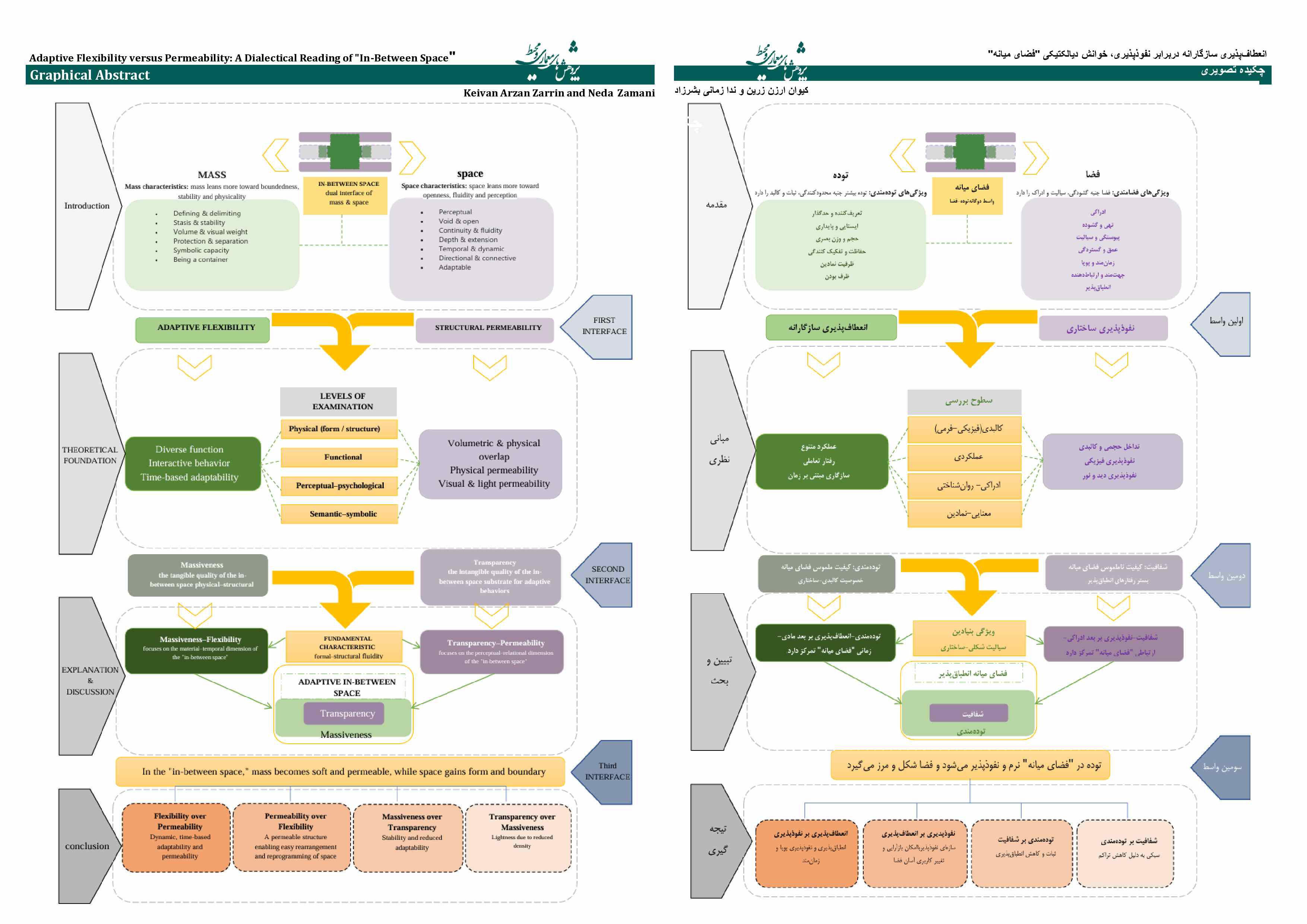
"فضای میانه" بعنوان واسط، دوگانه‌ی توده-فضا را به کیفیت‌های ملموس و غیر ملموس بدل می‌سازد. ویژگی‌هایی که در تاروپود هم، شکل کلی فضای میانه را ایجاد کرده‌اند. فضای میانه با ویژگی سیالت شکلی -ساختاری خود موجب بروز و ظهور دو مفهوم بنیادین فضاهای انطباق پذیر یعنی، نفوذپذیری و انعطاف‌پذیری را به نمایش می‌گزارد. "فضای میانه" با عاملیت ارتباط دهندگی و واسط بودن خود به‌عنوان سازمان‌دهنده‌ی نظام توده-فضا، بنیادی‌ترین رکن شکل‌گیری معماری است. با این حال عدم توجه به ویژگی‌های اساسی آن در ترکیب با سایر عوامل دخیل در ساختارهای معماری، موجب ناکارمدی ‌آن شده و تهی از کیفیت‌های صوری، عملکردی و معنایی خواهد بود. از همین رو دو رکن اساسی "شفافیت" و "توده‌مندی" با عاملیت دو ویژگی "انعطاف‌پذیری سازگارانه" و "نفوذ‌پذیری ساختاری" موجب سازگاری بیش‌تر با مفهوم "فضای میانه" در بستر شکل‌گیری معماری خواهد شد. پژوهش حاضر به لحاظ تحلیل محتوایی، بنیادی بوده و ماهیت کیفی دارد که براساس راهبردهای تحلیلی-توصیفی درتبیین ویژگی‌های مفهوم "فضای میانه" در ساختارهای معماری نیازمند بررسی مؤلفه‌های تأثیرگذار بر آن است. از این رو نخست تعریف دقیق از فضای میانه با تکیه برمفاهیم و بنیادهای شکل‌گیری آن صورت گرفته و در ادامه سطوح شکل‌گیری آن در قالب سطح کالبدی (فیزیکی-فرمی)، سطح عملکردی، سطح ادراکی-روان‌شناختی و سطح معنایی-نمادین آن بررسی شده است. برای خوانش این سطوح نیازمند تبیین دو مفهوم عام، نفوذپذیری ساختاری و انعطاف‌پذیری سازگارانه در فضای میانه است. ویژگی و خصوصیت اصلی این مفاهیم دو کلیدواژه بنیادین، یعنی "توده‌مندی" و "شفافیت" فضایی است که در شکل‌گیری "فضای میانه انطباق‌پذیر" حیاتی و ضروری است. نتیجه پژوهش حاضر تبیین "توده‌مندی" به‌عنوان ظرف پذیرش "شفافیت" است که در قالب خصوصیت کالبدی-ساختاری نمایان شده و پذیرنده‌ی عملکرد و رفتارهای سازگارانه و انطباق‌پذیر در "فضای میانه" شده و موجب بروز کنش‌های ادراکی و معنایی است.

چکیده تصویری

انعطاف‌پذیری سازگارانه دربرابر نفوذپذیری، خوانش دیالکتیکی فضای میانه
کلیدواژه‌ها

عنوان مقاله English

Adaptive Flexibility versus Permeability: A Dialectical Reading of "In-Between Space"

نویسندگان English

keivan Arzan Zarrin 1
Neda Zamani Bashar Zad 2
1 M.Sc. Graduate, Architecture, Faculty of Technology and Engineering, University of Zanjan, Zanjan, Iran.
2 M.Sc. Graduate, Architecture, Faculty of Technology and Engineering, University of Mohaghegh Ardabili, Ardabil, Iran.
چکیده English

As an interface, the "in-between space" transforms the mass-space duality into tangible and intangible qualities that, interwoven together, generate the overall form of the in-between space. Through its formal-structural fluidity, the in-between space brings forth and displays two foundational concepts of adaptable spaces: permeability and flexibility. Through its agency as a connector and interface, and as the organizer of the mass-space system, the "in-between space" constitutes the most fundamental pillar in the formation of architecture. However, neglecting its essential characteristics in combination with other factors involved in architectural structures renders it ineffective and devoid of formal, functional, and semantic qualities. Accordingly, the two essential pillars of "transparency" and "massiveness," through the agency of the two features "adaptive flexibility" and "structural permeability," achieve greater compatibility with the concept of "in-between space" within the context of architectural formation. The present research is fundamental in terms of content analysis and is qualitative in nature; based on analytical-descriptive strategies, it explains the characteristics of the concept of "in-between space" in architectural structures and requires an examination of the components influencing it. Accordingly, first a precise definition of the in-between space is provided, drawing on the concepts and foundations underlying its formation. Following this, its levels of formation are examined in the form of the physical (physical-formal) level, the functional level, the perceptual-psychological level, and the semantic-symbolic level. To read these levels, it is necessary to explain two general concepts: structural permeability and adaptive flexibility in the in-between space. The main characteristic and property of these concepts are the two foundational keywords, namely spatial "massiveness" and "transparency," which are vital and essential in the formation of the "adaptable in-between space." The result of the present research clarifies "massiveness" as the receiving vessel for "transparency," which manifests in the form of a physical-structural property, accommodates adaptive and adaptable functions and behaviors within the "in-between space," and gives rise to perceptual and semantic actions.

کلیدواژه‌ها English

In-between space
transparency
massiveness
adaptive flexibility
permeability
دوره 4، شماره 6 - شماره پیاپی 6
بهار و تابستان 1405
شهریور 1405

  • تاریخ دریافت 15 شهریور 1405
  • تاریخ پذیرش 29 شهریور 1405
  • تاریخ انتشار 01 شهریور 1405